 EN
EN  LV
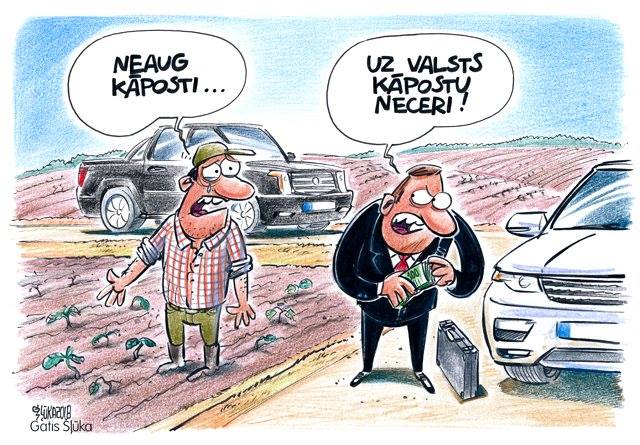
LV On June 19, the association “Farmers’ Parliament” sent a letter to the State Chancellery, the Ministry of Agriculture, the Ministry of Finance and the Latvian Association of Local Governments with an appeal to the Cabinet of Ministers to declare and the Saeima to approve an emergency situation in agriculture due to the prolonged drought. On June 26, the Crisis Management Council decided that, in accordance with the Civil Protection and Disaster Management Law, the consequences of the prolonged spring drought in agriculture throughout the territory of Latvia should be defined as a national natural disaster.
Given the circumstances, that there has been no rain in Latvia for a long time, plant vegetation is difficult and in some places even impossible. Livestock, grain, fruit and vegetable farms have suffered from the drought. The situation is slightly more favorable in those grain farms, where winter crops were sown in the autumn of 2017 and they did not drown.
33 municipalities have requested the declaration of a state of emergency: Ventspils Municipality, Kuldīga Municipality, Madona Municipality, Cesvaine Municipality, Aknīste Municipality, Kandava Municipality, Ērgļi Municipality, Talsi Municipality, Varakļāni Municipality, Gulbene Municipality, Pāvilosta Municipality, Nereta Municipality, Tukums Municipality, Nīca Municipality, Rēzekne Municipality, Aizpute Municipality, Viesīte Municipality, Alsunga Municipality, Rundāle Municipality, Tērvete Municipality, Balvi Municipality, Sala Municipality, Baltinava Municipality, Engure Municipality, Jaunjelgava Municipality, Dobele Municipality, Aloja Municipality, Sēja Municipality, Jelgava Municipality, Rugāji County Council, Jēkabpils County Municipality, Skrunda County Council and Durbe County Council.
Decision of the Crisis Management Council for farmers whose cooperation contracts will provide for derogations in the fulfillment of obligations due to force majeure or force majeure circumstances, will alleviate these force majeure or force majeure justification of the occurrence of the circumstances.
Similarly, the institutions that administer and control how farmers implement state and EU support measures will take the situation into account and will not impose penalties on farmers.
Source: Ministry of Agriculture